NEMA 14-50 Outlet for EV Charging: Speed, Cost and Safety
Quick answer
A portable EV charger on a 120-volt outlet adds about 5 miles of range an hour, about 50 miles overnight. On a 240-volt NEMA 14-50 outlet, many portable chargers reach Level 2 speed, about 25 miles an hour. The outlet needs a dedicated 40- to 50-amp circuit; older homes with 100-amp service may need a panel upgrade costing $1,000 to $3,000. Never use an extension cord.
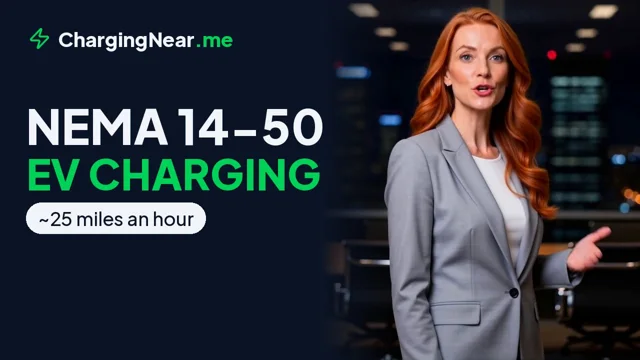
Watch · 0:35
NEMA 14-50 Outlet for EV Charging: Speed, Cost and Safety
NEMA 14-50 EV charging: about 25 miles of range an hour vs 5 on a regular outlet. Circuit needs, panel upgrade cost and safety.
Read the transcript
A NEMA 14-50 outlet can turn your garage into a Level 2 charger.
A regular 120-volt outlet adds about 5 miles of range an hour. That's about 50 miles overnight.
Plug a portable charger into a 240-volt NEMA 14-50, and you get about 25 miles an hour.
It needs its own 40- to 50-amp circuit. Older 100-amp homes may need a panel upgrade, 1,000 to 3,000 dollars.
Use a properly installed outlet, and never an extension cord.
Plan your home charging at ChargingNear.me.
NEMA 14-50 EV charging: about 25 miles of range an hour vs 5 on a regular outlet. Circuit needs, panel upgrade cost and safety.
How fast does a NEMA 14-50 outlet charge an EV?
A regular 120-volt outlet is Level 1 charging: about 5 miles of range an hour, or about 50 miles overnight. A NEMA 14-50 is a 240-volt outlet, the same kind used for electric ranges and RV hookups. Plug a portable charger that supports 240 volts into one and many reach Level 2 speed, about 25 miles of range an hour, the rate the U.S. Department of Energy's Alternative Fuels Data Center gives for Level 2 charging.
| Outlet | Volts | Range added per hour |
|---|---|---|
| Standard household outlet | 120 V | About 5 miles |
| NEMA 14-50 | 240 V | About 25 miles |
What does the outlet need?
- A dedicated circuit: 40 to 50 amps, with nothing else on it.
- Room in the panel: older homes with 100-amp service may need a panel upgrade first, which typically costs $1,000 to $3,000.
- A licensed electrician: to size the wire and breaker and pull any permit your town requires.
Is it safe to charge an EV from a NEMA 14-50?
Yes, when the outlet is properly installed on its own circuit. Plug the charger straight into the wall and never use an extension cord: charging draws heavy current for hours at a time. If the plug or outlet ever feels hot, stop charging and have an electrician check it.
Outlet or wall charger?
A hardwired Level 2 wall charger does the same job without a plug to wear out, and it can be wired for more power than a plug-in outlet allows. Compare the options in the best Level 2 home chargers, see what the work costs in home EV charger installation cost, and follow the home charging setup guide. Away from home, find Level 2 charging near you.
Frequently Asked Questions
How fast does a NEMA 14-50 outlet charge an EV?
With a portable charger that supports 240 volts, many EVs charge at Level 2 speed from a NEMA 14-50: about 25 miles of range an hour, against about 5 miles an hour on a regular 120-volt outlet.
What circuit does a NEMA 14-50 outlet need for EV charging?
A dedicated 40- to 50-amp circuit. Older homes with 100-amp service may need a panel upgrade first, which typically costs $1,000 to $3,000. Have a licensed electrician do the work.
Can I use an extension cord to charge my EV?
No. Plug the charger straight into a properly installed outlet and never use an extension cord.
Sources
- Charging Electric Vehicles at Home — U.S. DOE Alternative Fuels Data Center
- Electric Vehicle Charging Stations: charging levels — U.S. DOE Alternative Fuels Data Center